Getting to Know Orthotics: Function, Types, and Benefits for Supporting Mobility
2 September 2026·Ibrahim Medical4 menit baca
Getting to Know Orthotics: Function, Types, and Benefits for Supporting Mobility
Orthotics is an important field within rehabilitation and musculoskeletal health. An orthotic device, or orthosis, is a device used on the outside of the body to help support, direct, limit, or improve the function of a specific body part.
According to the World Health Organization (WHO), orthoses are included in the group of assistive products that can help improve a person's function and independence. WHO also explains that orthoses can support someone with limited physical function so they can carry out daily activities more independently.
What Is Orthotics?
Simply put, orthotics is a field related to the use of external assistive devices, or orthoses, to support body function. These devices can be used on various parts of the body, such as the foot, ankle, knee, hand, or spine.
An orthosis can serve various purposes, including helping provide stability, supporting weak body parts, helping control certain movements, and helping correct or accommodate a specific condition.
Guy's and St Thomas' NHS Foundation Trust explains that orthotic services cover the design, fabrication, and fitting of devices used on the outside of the body. Orthoses, braces, and special footwear can be used to help movement, correct deformities, and reduce pain or discomfort.
What Are the Functions of an Orthotic Device?
The use of orthotic products can be adapted to each individual's needs and condition. Some functions of an orthotic device include:
1. Providing Support and Stability
An orthosis can help provide support to body parts that need stabilization, such as the foot, ankle, knee, hand, or other body parts.
2. Helping Control Movement
Some types of orthoses are designed to help limit or direct certain movements so that a body part can receive support during activity.
3. Helping Support Movement Function
An orthotic device can be part of a rehabilitation program to help a person maintain or improve functional ability and mobility.
4. Helping Reduce Load or Discomfort
Certain types of orthoses can help distribute pressure and provide support to specific areas of the body. The American Academy of Orthopaedic Surgeons (AAOS) notes that orthotic devices for the foot and ankle can be used to help align and support the foot or ankle, accommodate deformities, and improve function.
Types of Orthotic Products
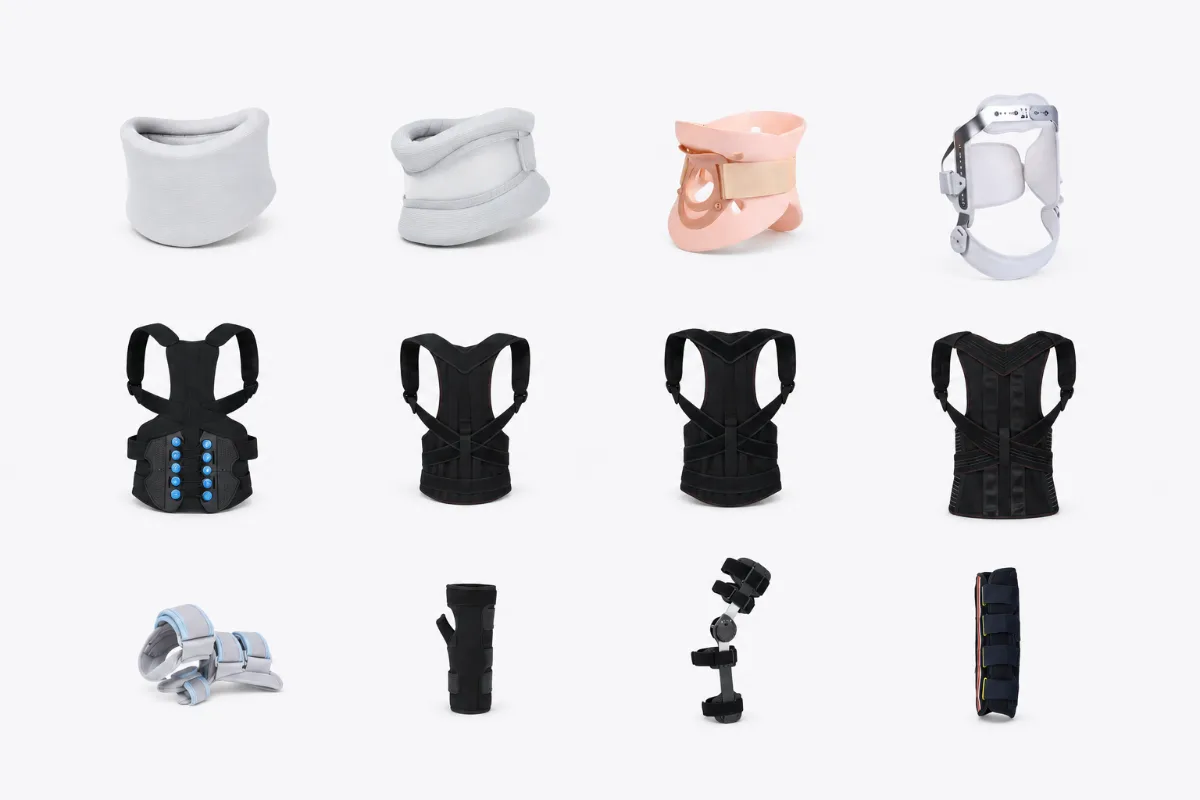
Orthotic products are available in various forms and functions. Some commonly used types include:
- Insoles or foot orthoses, devices placed inside shoes to help support the foot.
- Ankle Foot Orthosis (AFO), an orthosis used for the foot and ankle area.
- Knee-Ankle-Foot Orthosis (KAFO), which provides support to the knee, ankle, and foot.
- Braces or splints, used to provide support or help control movement in a specific body part.
- Spinal braces or supports, used to provide support to the spine area.
WHO also categorizes lower-limb orthoses as assistive products for rehabilitation, including various forms of insoles, lifts, splints, braces, and other supportive devices.
The Importance of Choosing the Right Orthotic Product
Choosing an orthotic device shouldn't be based on shape or size alone. The type of device, its function, level of support, size, and suitability to the user's needs are things that need to be considered.
AAOS notes that using an unsuitable orthotic device can affect walking mechanics and potentially cause problems. That's why consulting with a healthcare professional who understands orthotic needs can help determine the right device to choose.
Beyond product selection, fitting and adjustment are also an important part of the process. NHS England notes that proper provision and fitting of an orthosis can help improve quality of life, maintain mobility, and support a person's independence.
Orthotic Products at Ibrahim Medical
As a provider of health products and medical devices, Ibrahim Medical also offers a range of orthotic products to help meet users' need for devices that support movement function and rehabilitation.
The selection of orthotic products at Ibrahim Medical can be one of the considerations for those looking for orthotic devices, orthoses, braces, or other supportive equipment. Each product has different functions and characteristics, so the choice needs to be tailored to the user's needs.
To view the range of orthotic products from Ibrahim Medical, you can explore the orthotics category and see the details of each available product.
Conclusion
Orthotics plays an important role in helping provide support, stability, and function to specific parts of the body. The use of orthoses can be part of rehabilitation efforts and support a person's mobility and independence.
Because every user's needs are different, choosing an orthotic device should take into account condition, required function, size, comfort, and the recommendation of a healthcare professional or related expert.
Ibrahim Medical offers a range of orthotic products to help meet health support and rehabilitation device needs. Find the orthotic product that suits your needs through Ibrahim Medical.
References
1. World Health Organization (WHO) – WHO Standards for Prosthetics and Orthotics.
2. World Health Organization (WHO) – Assistive Technology.
3. American Academy of Orthopaedic Surgeons (AAOS) – Orthotics.
4. NHS England – Orthotic Services.
5. Guy's and St Thomas' NHS Foundation Trust – Patient Appliances (Orthotics).